Within Think Before Sharing
How to Slow Down Health Claims
Health claims can feel urgent and personal, so they need careful checks of evidence type, source incentives, and medical context.
On this page
- Why health posts spread
- Evidence checks for treatments
- When to seek expert context
Page outline Jump by section
Introduction
Health claims online deserve a slower kind of attention than ordinary opinion posts because they can change what people eat, buy, avoid, delay or ask a clinician to do. In the age of social media and AI, the danger is not only that a claim may be false. It is that it may feel urgent, personal and emotionally convincing before the reader has checked what kind of evidence supports it, who is selling the solution, and whether the advice fits their medical situation. Good critical thinking about health misinformation therefore starts with accuracy pressure: deliberately slowing the share, purchase or treatment decision long enough to ask, “What is the evidence, what is missing, and who can interpret this safely for me?”
Health misinformation is especially difficult because it often mixes something true with something unsupported. A supplement may contain a biologically active ingredient; a patient story may be sincere; an early lab study may be real. The misleading leap usually comes when those fragments are turned into a treatment claim, a guarantee, a warning against established care or a product pitch.
Why Health Posts Spread Before They Are Checked
Health content travels well on social media because it attaches itself to fear, hope and identity. A post about a “hidden cure” or “toxic everyday food” does not arrive as a neutral proposition. It often arrives as a rescue message: protect your family, do not trust institutions, try this before it is too late. That emotional framing can make pausing feel irresponsible, even though pausing is exactly what health claims require.
The World Health Organization uses the term “infodemic” for an overload of information, including false or misleading content, during health emergencies. Its review of pandemic-era evidence found that misleading health content on social media was associated with distress and could affect health behaviours during crises, emergencies and humanitarian settings. That matters because the harm is not limited to “believing the wrong fact”; it can shape vaccination decisions, use of medicines, trust in clinicians and willingness to follow public health advice.[World Health Organization]who.intWorld Health OrganizationInfodemics and misinformation negatively affect people's…1 Sept 2022 — The systematic review found that peopl…
The design of social platforms adds a second pressure. Posts are rewarded for engagement, not for clinical accuracy. A dramatic before-and-after video, a personal testimonial or a short clip from someone in a white coat is easier to share than a cautious explanation of risk, uncertainty and dosage. Research on accuracy prompts has shown that briefly shifting users’ attention towards whether a claim is accurate can improve the quality of what they intend to share, mainly by reducing willingness to share false headlines. In other words, many people are not committed to spreading falsehoods; the platform moment often fails to make accuracy the main task.[PMC]pmc.ncbi.nlm.nih.govPMCAccuracy prompts are a replicable and generalizableby G Pennycook · 2022 · Cited by 363 — Accuracy prompts increased the quality of news that people share (sharing discernment) relative…
Health misinformation also benefits from “context collapse”. A claim designed for one group, one condition or one stage of illness can be copied into a feed where it reaches people with completely different risks. Advice that is harmless for one person may be dangerous for another because of pregnancy, age, immune status, cancer treatment, mental health history or interactions with prescription medicines.
Evidence Checks for Treatments
A useful first question is not “Could this be true?” but “What kind of evidence would be needed before acting on it?” Many misleading health posts rely on evidence that is too weak for the action they recommend.
A personal story can be meaningful, but it cannot show that a treatment caused an improvement. Symptoms often fluctuate, people use several interventions at once, and some conditions improve over time regardless of what was tried. A laboratory study can show that a substance affects cells under controlled conditions, but it does not prove that swallowing the substance will safely treat a disease in humans. An animal study may justify further research, but it is not the same as a tested treatment for patients. For treatment decisions, stronger evidence usually comes from well-designed human studies, especially randomised controlled trials and systematic reviews that compare outcomes across multiple studies.
This distinction is crucial for cancer misinformation. The US Food and Drug Administration warns that products claiming to cure cancer are often marketed with red-flag phrases such as “miracle cure”, “guaranteed” or “works in minutes”. The agency notes that illegally sold cancer products are commonly promoted online and on social media without having been reviewed for safety and effectiveness.[U.S. Food and Drug Administration]fda.govproducts claiming cure cancer are cruel deceptionFood and Drug AdministrationProducts Claiming to "Cure" Cancer Are a Cruel DeceptionJanuary 22, 2026 — 4 Sept 2020 — Miracle cure! Truly…
The risk is not only wasting money. A National Cancer Institute summary of a large study reported that patients with nonmetastatic breast, lung or colorectal cancer who chose alternative therapies as their initial cancer treatment had substantially worse survival than patients who received conventional treatment. For breast and colorectal cancer in that study, patients using alternative therapy initially were nearly five times as likely to die over the median follow-up period.[Cancer.gov]cancer.govalternative medicine cancer survivalAlternative Medicine for Cancer Treatment Raises Mortality…12 Sept 2017 — Choosing alternative medicine as an initial cancer treatment…
This does not mean every complementary practice is automatically harmful. Supportive practices such as nutrition advice, exercise, psychological support or symptom management can have a place when they do not replace evidence-based care and are discussed with clinicians. The critical line is substitution: when an online claim encourages a patient to delay, refuse or abandon proven treatment in favour of an unproven cure.
The “Natural” Claim Is Not a Safety Check
One of the most common health-misinformation shortcuts is the idea that “natural” means safe. In medical terms, that is not a reliable rule. Natural substances can be pharmacologically active, interact with medicines, vary in strength, worsen conditions or cause harm at high doses.
St John’s wort is a useful example because it is not simply a “fake” remedy. It has evidence for some uses, particularly mild to moderate depression, but it also interacts with many medicines. Mayo Clinic warns that St John’s wort can cause serious side effects and should be discussed with a healthcare professional, especially when someone is taking other medicines. A clinical review found interactions with drugs including warfarin, digoxin, tacrolimus, indinavir, alprazolam and simvastatin.[Mayo Clinic]mayoclinic.orgart 20362212Mayo ClinicSt. John's wort21 Mar 2025 — St. John's wort can treat mild to moderate depression. But the supplement interacts with many med…
This is why supplement misinformation is a practical problem for health services, not just an online annoyance. In June 2026, the World Cancer Research Fund warned about cancer misinformation and the need for trusted evidence, while reporting growing concern about misleading supplement claims online. Recent UK reporting on a WCRF-commissioned YouGov poll said two in five frontline NHS workers regularly encountered patients who believed misleading claims about supplements, with concerns especially high for cancer patients targeted by unproven or risky alternatives.[World Cancer Research Fund]wcrf.orgOpen source on wcrf.org.
A good evidence check for a supplement or treatment claim therefore asks four questions:
- What condition is it claimed to treat? Vague claims such as “boosts immunity” or “detoxes the body” are harder to test and easier to exploit.
- What human evidence supports it? Look for trials in people with the relevant condition, not only cell, animal or anecdotal evidence.
- What are the risks and interactions? A post that mentions benefits but not dosage, side effects or medicine interactions is incomplete.
- Is someone selling the answer? Product links, affiliate codes, private groups, paid consultations and “limited time” offers are incentives to scrutinise the claim more closely.
AI Makes Health Claims Look More Authoritative
Generative AI changes health misinformation in two ways. First, it can create polished explanations, fake citations, synthetic images and persuasive scripts at low cost. Secondly, it can impersonate medical authority through deepfake voices, cloned faces or chatbot-style confidence.
This matters because health trust is often visual and tonal. A clean layout, a confident voice or a person who appears to be a clinician can make weak evidence feel strong. Reporting in 2025 described AI deepfakes of real doctors being used on social platforms to promote unproven supplements, with clips altered so that reputable figures appeared to endorse products or fabricated conditions.[The Guardian]theguardian.comOpen source on theguardian.com.
AI chatbots add a subtler risk. They can be helpful for explaining general concepts, drafting questions for a doctor or translating medical language into plainer wording, but they should not be treated as a clinician. A 2026 BMJ Open audit of five popular generative AI chatbots found that a substantial amount of medical information was inaccurate or incomplete, and the BMJ summary warned that continued deployment without public education and oversight could amplify misinformation.[BMJ Open]bmjopen.bmj.comOpen source on bmj.com.
The problem is not only outright fabrication. Research on large language models in healthcare has warned that models can produce plausible but incorrect information and may affirm user assumptions in ways that make mistaken beliefs feel validated. This is especially risky when a user asks a leading question such as “Why is my doctor hiding the cure?” or “How can I replace my medication naturally?” rather than asking for balanced information about risks and evidence.[PMC]pmc.ncbi.nlm.nih.govOpen source on nih.gov.
For AI-generated health advice, the accuracy pressure should be stronger, not weaker. Ask where the information comes from, whether the citations are real, whether the answer distinguishes general education from personal advice, and whether it recommends urgent care when symptoms could be serious.
When to Seek Expert Context
Health misinformation often becomes dangerous at the point where general information is applied to a specific person. A post can discuss a real study and still be unsafe for someone with a different diagnosis, medication list, age, pregnancy status or treatment plan. Expert context is not a demand to “trust authority blindly”; it is a recognition that medical risk depends on details a social post usually does not know.
Seek professional advice before acting on an online health claim when it involves any of the following:
- stopping, delaying or changing prescribed treatment;
- cancer, heart disease, pregnancy, children, severe infection, mental health crisis or long-term illness;
- supplements alongside prescription medicines;[sps.nhs.uk]sps.nhs.ukcomplementary products resources to support answering questionscomplementary products resources to support answering questions
- extreme diets, fasting, detoxes or high-dose vitamins;
- symptoms that are new, severe, worsening or unexplained;
- a claim that frames doctors, pharmacists or public health bodies as enemies without showing strong evidence.
The most useful conversation with a clinician is not “I saw this online, is it stupid?” but “I saw this claim; what evidence would you look for, could it interact with my treatment, and what should I monitor?” That framing keeps the patient’s concern visible while moving the discussion from shame or argument to risk assessment.
There is also a role for trusted public health and medical organisations. Sources such as the NHS, WHO, Cancer Research UK, national medicines regulators, professional medical bodies and condition-specific charities can be useful because they are more likely to explain uncertainty, contraindications and evidence strength. They are not perfect, and they can lag behind fast-moving research, but they are usually better starting points than influencer clips, sponsored ads or anonymous screenshots.
A Practical Pause for Health Claims
The safest habit is to insert a short delay between seeing a health claim and acting on it. That delay does not need to be complicated. It should be enough to shift the brain from urgency to evaluation.
Before sharing or trying a health claim, use this quick filter:
- Claim: What exactly is being claimed: prevention, cure, symptom relief, diagnosis or risk?
- Evidence: Is the support a testimonial, lab study, animal study, trial, review or guideline?
- Fit: Does it apply to people like me, with my condition and medicines?
- Risk: What could go wrong if the claim is false, incomplete or only partly true?
- Incentive: Is the source selling a product, building a following, recruiting to a group or attacking competitors?
- Check: What would a pharmacist, GP, specialist nurse or relevant charity say?
The key is not to become paralysed by doubt. It is to match the level of checking to the level of consequence. Sharing a general wellbeing article may require a lighter check than changing medication, buying an expensive supplement or refusing a screening test. The higher the possible harm, the more the claim needs evidence, context and professional interpretation.
The Critical Thinking Takeaway
Health misinformation is powerful because it meets people at moments of fear, pain, uncertainty and hope. Social media speeds that encounter up; AI can make it look more polished and authoritative. The critical response is not cynicism towards every health claim, nor blind trust in every institution. It is disciplined accuracy pressure: slowing down urgent claims, separating evidence types, noticing incentives, checking medical fit and seeking expert context before a post becomes a decision.
Amazon book picks
Further Reading
Books and field guides related to How to Slow Down Health Claims. Use these as the next step if you want deeper reading beyond the article.
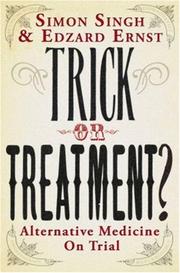
Trick or Treatment?
First published 2008. Subjects: Placebo Effect, Evidence-Based Medicine, Complementary Therapies, Alternative medicine, Quackery.
eBay marketplace picks
Marketplace Samples
Example marketplace items related to this page. Use the search link to explore similar finds on eBay.
Endnotes
1.
Source: who.int
Link:https://www.who.int/europe/news/item/01-09-2022-infodemics-and-misinformation-negatively-affect-people-s-health-behaviours–new-who-review-finds
Source snippet
World Health OrganizationInfodemics and misinformation negatively affect people's...1 Sept 2022 — The systematic review found that peopl...
2.
Source: pmc.ncbi.nlm.nih.gov
Title: PMCAccuracy prompts are a replicable and generalizable
Link:https://pmc.ncbi.nlm.nih.gov/articles/PMC9051116/
Source snippet
by G Pennycook · 2022 · Cited by 363 — Accuracy prompts increased the quality of news that people share (sharing discernment) relative...
3.
Source: fda.gov
Title: products claiming cure cancer are cruel deception
Link:https://www.fda.gov/consumers/consumer-updates/products-claiming-cure-cancer-are-cruel-deception
Source snippet
Food and Drug AdministrationProducts Claiming to "Cure" Cancer Are a Cruel DeceptionJanuary 22, 2026 — 4 Sept 2020 — Miracle cure! Truly...
Published: January 22, 2026
4.
Source: fda.gov
Title: illegally sold cancer treatments
Link:https://www.fda.gov/consumers/health-fraud-scams/illegally-sold-cancer-treatments
Source snippet
Food and Drug AdministrationIllegally Sold Cancer Treatments1 Nov 2017 — The products are marketed and sold without FDA approval, most co...
5.
Source: cancer.gov
Title: alternative medicine cancer survival
Link:https://www.cancer.gov/news-events/cancer-currents-blog/2017/alternative-medicine-cancer-survival
Source snippet
Alternative Medicine for Cancer Treatment Raises Mortality...12 Sept 2017 — Choosing alternative medicine as an initial cancer treatment...
6.
Source: pmc.ncbi.nlm.nih.gov
Title: PMCClinical relevance of St
Link:https://pmc.ncbi.nlm.nih.gov/articles/PMC7056460/
Source snippet
John's wort drug interactions revisitedby S Nicolussi · 2020 · Cited by 238 — Research has shown that SJW altered the pharmacokinetics of...
7.
Source: wcrf.org
Link:https://www.wcrf.org/about-us/news-and-blogs/why-trusted-evidence-matters-in-the-fight-against-cancer-misinformation/
8.
Source: bmjopen.bmj.com
Link:https://bmjopen.bmj.com/content/16/4/e112695
9.
Source: bmjgroup.com
Link:https://bmjgroup.com/substantial-amount-of-medical-information-provided-by-popular-chatbots-inaccurate-and-incomplete/
10.
Source: who.int
Link:https://www.who.int/
11.
Source: who.int
Link:https://www.who.int/health-topics/infodemic
12.
Source: who.int
Link:https://www.who.int/europe/publications/m/item/digital-solutions-to-health-risks-raised-by-the-covid-19-infodemic.-synthesis-report
13.
Source: who.int
Link:https://www.who.int/europe/publications/i/item/WHO-EURO-2024-8010-47778-70534
14.
Source: applications.emro.who.int
Link:https://applications.emro.who.int/dsaf/dsa237.pdf
15.
Source: midlandsmedicines.nhs.uk
Link:https://www.midlandsmedicines.nhs.uk/filestore/QA254_AntidepressantsComplement-BM.pdf?UNLID=9586356632022124234516
16.
Source: sps.nhs.uk
Title: complementary products resources to support answering questions
Link:https://www.sps.nhs.uk/articles/complementary-products-resources-to-support-answering-questions/
17.
Source: bmj.com
Title: bmj 2023 076542
Link:https://www.bmj.com/content/384/bmj-2023-076542
18.
Source: bmjopen.bmj.com
Link:https://bmjopen.bmj.com/content/bmjopen/16/4/e112695.full.pdf
19.
Source: patient.info
Link:https://patient.info/doctor/drug-therapy/st-johns-wort
20.
Source: tga.gov.au
Link:https://www.tga.gov.au/safety/safety-monitoring-and-information/safety-alerts/st-johns-wort-important-interactions-between-st-johns-wort-hypericum-perforatum-preparations-and-prescription-medicines
21.
Source: mayoclinic.org
Title: art 20362212
Link:https://www.mayoclinic.org/drugs-supplements-st-johns-wort/art-20362212
Source snippet
Mayo ClinicSt. John's wort21 Mar 2025 — St. John's wort can treat mild to moderate depression. But the supplement interacts with many med...
22.
Source: theguardian.com
Link:https://www.theguardian.com/society/2026/jun/14/nhs-staff-food-supplement-disinformation-cancer-charity-social-media
23.
Source: theguardian.com
Link:https://www.theguardian.com/society/2025/dec/05/ai-deepfakes-of-real-doctors-spreading-health-misinformation-on-social-media
24.
Source: pmc.ncbi.nlm.nih.gov
Link:https://pmc.ncbi.nlm.nih.gov/articles/PMC10552880/
25.
Source: pmc.ncbi.nlm.nih.gov
Link:https://pmc.ncbi.nlm.nih.gov/articles/PMC12564032/
26.
Source: ncbi.nlm.nih.gov
Link:https://www.ncbi.nlm.nih.gov/books/NBK572169/
27.
Source: pubmed.ncbi.nlm.nih.gov
Link:https://pubmed.ncbi.nlm.nih.gov/35484277/
28.
Source: pubmed.ncbi.nlm.nih.gov
Link:https://pubmed.ncbi.nlm.nih.gov/34283416/
29.
Source: pmc.ncbi.nlm.nih.gov
Link:https://pmc.ncbi.nlm.nih.gov/articles/PMC12924558/
30.
Source: pmc.ncbi.nlm.nih.gov
Link:https://pmc.ncbi.nlm.nih.gov/articles/PMC9421549/
31.
Source: pmc.ncbi.nlm.nih.gov
Link:https://pmc.ncbi.nlm.nih.gov/articles/PMC9114791/
32.
Source: pmc.ncbi.nlm.nih.gov
Link:https://pmc.ncbi.nlm.nih.gov/articles/PMC10551800/
33.
Source: ncbi.nlm.nih.gov
Link:https://www.ncbi.nlm.nih.gov/books/NBK572168/
34.
Source: pmc.ncbi.nlm.nih.gov
Link:https://pmc.ncbi.nlm.nih.gov/articles/PMC9082967/
35.
Source: pmc.ncbi.nlm.nih.gov
Link:https://pmc.ncbi.nlm.nih.gov/articles/PMC7857950/
36.
Source: pmc.ncbi.nlm.nih.gov
Link:https://pmc.ncbi.nlm.nih.gov/articles/PMC9359307/
37.
Source: pmc.ncbi.nlm.nih.gov
Link:https://pmc.ncbi.nlm.nih.gov/articles/PMC12940307/
38.
Source: pmc.ncbi.nlm.nih.gov
Link:https://pmc.ncbi.nlm.nih.gov/articles/PMC7532328/
39.
Source: pubmed.ncbi.nlm.nih.gov
Link:https://pubmed.ncbi.nlm.nih.gov/28922780/
40.
Source: pmc.ncbi.nlm.nih.gov
Link:https://pmc.ncbi.nlm.nih.gov/articles/PMC6233773/
41.
Source: pubmed.ncbi.nlm.nih.gov
Link:https://pubmed.ncbi.nlm.nih.gov/41980854/
42.
Source: pubmed.ncbi.nlm.nih.gov
Link:https://pubmed.ncbi.nlm.nih.gov/41606555/
43.
Source: downloads.regulations.gov
Link:https://downloads.regulations.gov/FDA-2019-P-2945-0005/content.pdf
Additional References
44.
Source: youtube.com
Link:https://www.youtube.com/watch?v=wVBnKHc1fAc
Source snippet
Decoding Deception: The Psychology of Combating Misinformation...
45.
Source: youtube.com
Title: Health Misinformation: UNPACKED livestream
Link:https://www.youtube.com/watch?v=H_nClQ2WH6c
Source snippet
Episode 1: Addressing Health Misinformation and Disinformation to Advance Truth-telling...
46.
Source: ftc.gov
Title: fda act against internet vendors fraudulent diabetes cures treatments
Link:https://www.ftc.gov/news-events/news/press-releases/2006/10/ftc-fda-act-against-internet-vendors-fraudulent-diabetes-cures-treatments
47.
Source: researchgate.net
Link:https://www.researchgate.net/publication/342579856Fighting_COVID-19_Misinformation_on_Social_Media_Experimental_Evidence_for_a_Scalable[Accuracy-Nudge
48.
Source: researchgate.net
Link:https://www.researchgate.net/publication/395628638_Health_Misinformation_on_Social_Media_A_Review_of_Management_and_Innovation_Perspectives
49.
Source: researchgate.net
Link:https://www.researchgate.net/publication/330710636_Fighting_misinformation_on_social_media_using_crowdsourced_judgments_of_news_source_quality
50.
Source: researchgate.net
Link:https://www.researchgate.net/publication/360253696_Accuracy_prompts_are_a_replicable_and_generalizable_approach_for_reducing_the_spread_of_misinformation
51.
Source: researchgate.net
Link:https://www.researchgate.net/publication/388187901_The_Influence_of_Social_Media_Health_Misinformation_on_Vaccination_Intentions_A_Behavioral_Perspective
52.
Source: reddit.com
Link:https://www.reddit.com/r/Futurology/comments/1pgkb9i/ai_deepfakes_of_real_doctors_spreading_health/
53.
Source: prosocialdesign.org
Link:https://www.prosocialdesign.org/library/accuracy-prompts
Topic Tree
Follow this branch
Parent topic
Think Before SharingRelated pages 24
- Accuracy Nudge Can One Pause Stop a False Share?
- AI Tutors Should You Trust a Chatbot Tutor?
- AI Virality Why AI Misinformation Travels So Easily
- Community Notes Can the Crowd Correct the Feed?
- Corroboration Who Else Can Confirm This Claim?
- Deepfakes How to Check a Voice or Video Claim
- Emotional Posts Why Outrage Is Not Evidence
- Evidence Types Not All Evidence Deserves Equal Weight
- +16 more in sidebar