Within Think Before Sharing
When Should You Go to the Source?
Primary documents, regulator notices, court filings, and datasets can clarify what a viral interpretation leaves out.
On this page
- What counts as primary evidence
- How to read official documents
- When primary sources still need context
Page outline Jump by section
Introduction
Primary sources are the receipts behind a claim: the court filing rather than the screenshot of a legal argument, the regulator notice rather than the viral thread about it, the dataset notes rather than the chart cropped from someone’s post. In the age of social media and AI, going to the source matters because summaries can be persuasive while leaving out dates, definitions, exclusions, uncertainty and legal status. A primary document will not automatically settle every dispute, but it often changes the question from “Do I trust this person?” to “Does the underlying record support what they say?”
This is especially important when a claim depends on official action or numbers: an alleged ban, fine, prosecution, safety signal, spending figure, migration total, crime trend, legal ruling or scientific dataset. The strongest check is not always to read everything. It is to identify the claim’s core evidence, open the original record, and ask whether the viral interpretation survives contact with the full context.
What Counts as Primary Evidence?
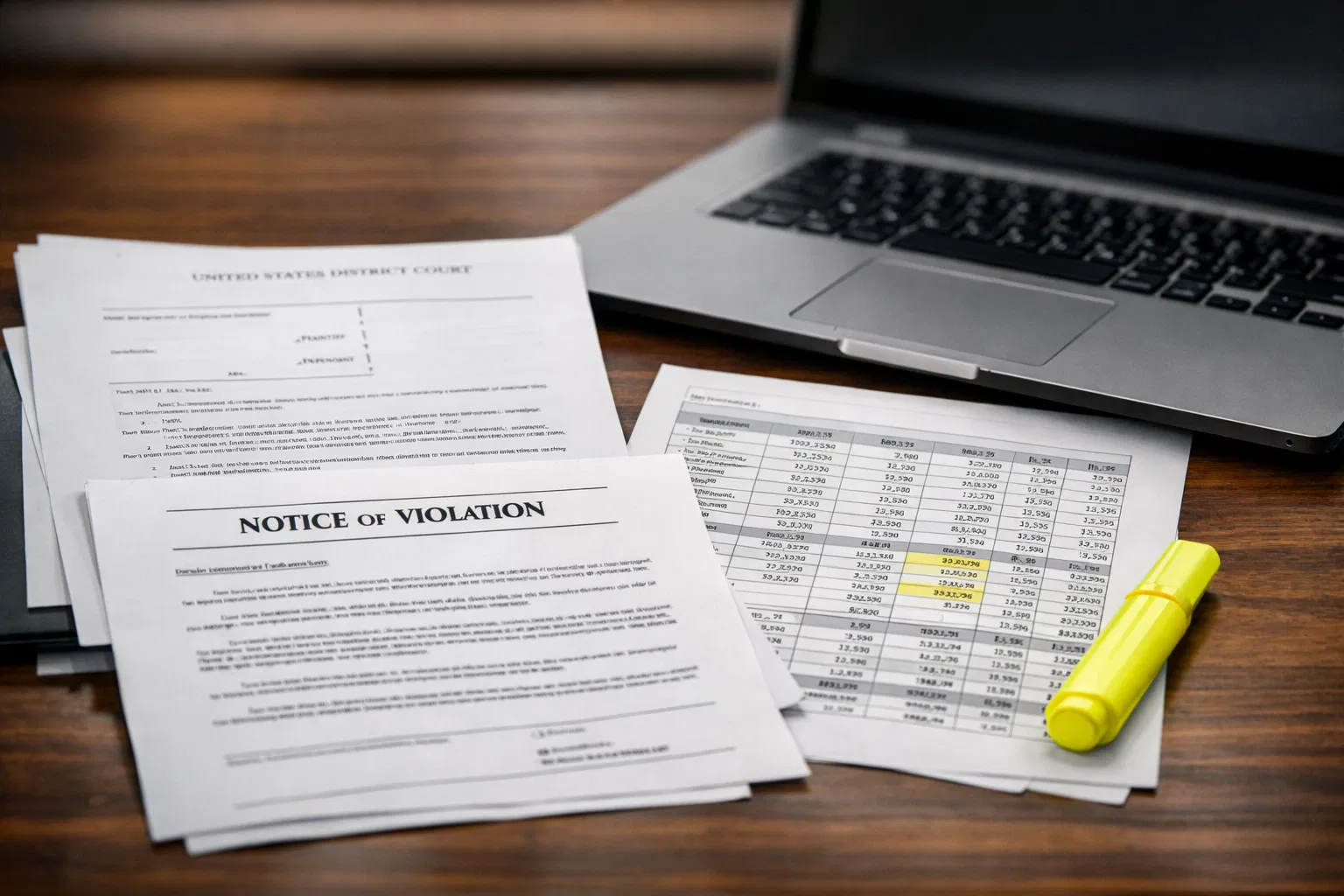
A primary source is evidence close to the event, decision or dataset being discussed. For online claims, the most useful primary sources are often official records that can be checked independently: a regulator’s enforcement notice, a court order, a government statistical release, a parliamentary report, a public dataset, a company filing, a consultation document, a transcript, a law, or the archived version of a page before it was edited.
This matters because many viral claims are not wholly invented. They are often built from a real fragment that has been stretched. A genuine dataset can be used to imply causation it does not show. A real court filing can be mistaken for a court finding. A regulator’s proposal can be presented as a law already in force. A ministerial number can be shared without the definitions or caveats needed to interpret it. The UK Parliamentary Office of Science and Technology describes misleading information as including opinion presented as fact and misleading use of statistics, not just fabricated content.[Research Briefings]researchbriefings.files.parliament.ukResearch BriefingsDisinformation: sources, spread and impactApril 26, 2024 — 25 Apr 2024 — Misleading information used to frame an issue…
Useful primary evidence commonly falls into a few practical categories:
- Official decisions: court judgments, regulator enforcement actions, election authority notices and government determinations.
- Underlying records: filings, transcripts, consultation responses, tender documents, minutes, legislation and archived webpages.
- Official data: statistical releases, public datasets, methodology notes and data-quality warnings.
- Institutional corrections: regulator letters, public-body clarifications, retractions, amended tables and casework reports.
- Machine-readable evidence: datasets, metadata, audit logs and public repositories that let others reproduce or challenge a claim.
The point is not to worship official material. Public bodies can make mistakes, use unclear wording or publish data with limits. The point is that primary evidence gives a reader something more stable than a reposted interpretation.
When a Viral Claim Needs the Original Record
A source check is most valuable when the claim asks you to believe that something official has happened. Claims about court cases, arrests, fines, public-health data, immigration figures, school policies, election rules, local council decisions and AI-generated political content all need a different standard from everyday opinion.
A good rule is: the more a claim relies on institutional authority, the closer you should get to the institution’s own record. If a post says “the court ruled”, look for the judgment, not just the headline. If it says “the government data proves”, look for the dataset notes. If it says “the regulator banned”, check whether the document is a proposal, guidance, warning, settlement, final order or press release.
The AI-generated robocall before the 2024 New Hampshire primary is a useful example. Many posts and headlines described a fake call using President Biden’s voice. The official record added important details: New Hampshire’s Attorney General said investigators had identified the source of the 21 January 2024 robocalls, while the FCC later described AI-generated voice cloning used to spread misinformation before the primary and proposed a $6 million fine. doj.nh.gov+2Federal Communications Commission Docs[doj.nh.gov]doj.nh.govvoter suppression ai robocall investigation update6 Feb 2024 — The Attorney General's Office Election Law Unit has identified the source of the January 21, 2024, robocalls received by num… The primary sources did not merely repeat that “a deepfake happened”; they clarified who investigators linked to the calls, what legal powers were being used, and what stage the enforcement action had reached.
Court filings offer a different lesson. In the well-known Mata v Avianca case, the problem was not a viral rumour but legal material submitted to a court after lawyers used ChatGPT-generated authorities. The court record showed that fake cases were cited, that concerns were raised when the opposing side could not locate them, and that sanctions followed after the lawyers failed to correct the problem promptly.[law.berkeley.edu]law.berkeley.eduMata vAvianca, Inc., 678 F.Supp.3d 443 (2023)December 1, 2025 — The narrative leading to sanctions against Respondents includes the filing of t… A social post might summarise that as “AI made up cases”, but the order shows the practical standard: citations must be checked against real legal sources, not treated as true because a fluent system produced them.
How to Read Official Documents Without Getting Lost
Official documents can be intimidating because they are long, technical and often written for lawyers, statisticians or regulators. A useful check does not require reading them like a specialist. It requires reading them with the right questions.
Start with the document’s status. Is it a final decision, a draft, a consultation, a complaint, a charge, a settlement, a press notice, a data table, or an explanatory note? A lawsuit is not a finding. An indictment is not a conviction. A regulator’s proposed fine is not always the same as a final penalty. A consultation document may show what an agency is considering, not what the law currently requires.
Then check the date and version. Social media often recirculates old documents as if they are new, or new copies of old data as if they are fresh discoveries. In fast-moving areas such as AI, public health, elections and platform regulation, a date can change the meaning of a document. A 2024 proposal, a 2025 review and a 2026 enforcement update may all be true, but they do not answer the same question.
Finally, look for definitions and exclusions. Official documents often turn on terms that sound ordinary but have technical meanings. “Reported”, “confirmed”, “serious”, “illegal”, “accredited”, “estimate”, “forecast”, “case”, “complaint” and “incident” can each carry a specific institutional definition. Misreading one word can turn a cautious statistic into a dramatic but false conclusion.
Official Data Can Clarify — and Mislead
Datasets are powerful because they make claims testable. They are also easy to misuse because numbers look objective even when the interpretation is weak. A chart can be copied without its denominator, confidence interval, collection method, missing-data warning or causal caveat.
The Vaccine Adverse Event Reporting System, or VAERS, is a clear example of why primary data needs context. VAERS is a real US government safety-monitoring system, and its data are public. But the CDC explains that a VAERS report alone does not show that a vaccine caused or contributed to an adverse event; FDA guidance similarly says VAERS reports generally cannot determine causation.[CDC]cdc.govAbout the Vaccine Adverse Event Reporting System (VAERS)17 Apr 2026 — A VAERS report alone does not indicate whether a vaccine caused… The official VAERS data page warns that report counts alone should not be treated as evidence of the frequency, severity or causal existence of vaccine problems, because reports may be incomplete, inaccurate, coincidental or unverified.[vaers.hhs.gov]vaers.hhs.govVAER SVAER S
This does not make VAERS useless. It makes it a signal-detection system, not a cause-of-death calculator. The difference is crucial. A responsible check asks: What was the dataset designed to measure? Who can submit reports? Are reports verified? Is there a comparison group? Are rates being calculated correctly? Has a safety signal been followed up through stronger systems? Johns Hopkins’ public-health explanation makes the same point: VAERS can suggest patterns that need evaluation, but it cannot by itself determine causation.[Bloomberg School of Public Health]publichealth.jhu.eduwhat vaers is and isntwhat vaers is and isnt
Official statistics in public debate raise similar problems. The UK Office for Statistics Regulation’s “intelligent transparency” guidance says numbers used by government should be released in an open, clear and accessible way so they can be scrutinised and used appropriately.[Office for Statistics Regulation]osr.statisticsauthority.gov.ukOpen source on statisticsauthority.gov.uk. OSR has also stressed “equal access”: public claims using statistics should be based on publicly available data, preferably the latest available official statistics, rather than data available only to ministers or insiders.[Office for Statistics Regulation]osr.statisticsauthority.gov.ukOffice for Statistics Regulation Embedding the habit of intelligent transparencyOffice for Statistics Regulation Embedding the habit of intelligent transparency That principle is directly relevant to social media: a number is much harder to check when the source, table, date or method is missing.
A Practical Source-Check Sequence
A good primary-source check is a decision process, not an academic ritual. The aim is to spend effort where it changes the reliability of the claim.
1. Isolate the checkable claim.
Do not try to verify the whole post at once. Extract the sentence that can be tested: “The regulator fined X”, “the court found Y”, “the data shows Z increased by 300%”, “the council announced this policy”, or “this official notice proves the image is real.”
2. Identify what the primary source would have to be.
A legal claim needs a court document. A public-health claim needs the dataset, trial report, safety notice or regulator communication. A claim about government spending needs a budget table, audited account or parliamentary answer. A claim about election procedure needs the election authority, statute or official guidance.
3. Search upstream, not sideways.
A useful digital-literacy approach is SIFT: stop, investigate the source, find better coverage, and trace claims back to the original context. Library guides describing SIFT emphasise tracing quotations, claims and media back to where they first appeared, rather than judging only the site or post in front of you.[University of Chicago Library Guides]guides.lib.uchicago.eduUniversity of Chicago Library Guides The SIFT MethodUniversity of Chicago Library Guides The SIFT Method
4. Compare the viral wording with the official wording.
Look for changes in certainty. “May”, “alleged”, “proposed”, “reported”, “estimated”, “associated with” and “under investigation” are often upgraded online into “proved”, “banned”, “caused” or “confirmed”. The distortion may be small in language but large in meaning.
5. Check whether the document answers the same question.
A dataset about reports does not automatically answer causation. A complaint does not prove wrongdoing. A regulator’s guidance may not be legally binding. A court order in one jurisdiction may not apply elsewhere. A table about England may not support a claim about the whole UK.
6. Look for expert or institutional interpretation when the source is technical.
Primary sources are strongest when combined with context from specialists who understand the method. For statistics, methodology notes and regulator commentary may matter as much as the table itself. For court records, the procedural posture matters. For technical AI claims, the model card, audit report or benchmark method may matter more than the headline score.

Why AI Makes Primary Checks More Important
Generative AI makes source-checking more urgent because it can produce fluent summaries, plausible citations and official-sounding explanations at scale. The danger is not only fake images or deepfake audio. It is also the everyday production of text that feels sourced but is not.
Legal hallucination cases show this clearly. In Mata v Avianca, the failure was visible because courts require citations that can be checked. More recent reporting and trackers show that AI-generated or AI-assisted fake legal citations have continued to appear in court contexts, with judges increasingly sanctioning lawyers who fail to verify them.[Reuters]reuters.comJudge rules both sides in lawsuit misused AI, disqualifies lawyersJudge rules both sides in lawsuit misused AI, disqualifies lawyers Research on legal hallucinations has also found that large language models can produce false answers to specific, verifiable legal questions and may fail to correct false assumptions in prompts.[arXiv]arxiv.orgOpen source on arxiv.org.
The same logic applies outside law. An AI-generated answer may cite a report that exists but misstate its findings, combine details from different jurisdictions, invent a quotation, or omit the caveat that changes the meaning. A reader checking a primary source should therefore ask not only “Is there a citation?” but “Does the cited document actually say what the summary claims?”
AI also raises the value of provenance: knowing where a claim, image, audio clip or dataset came from. Official notices, archived webpages, metadata, court dockets and regulator pages can create an evidential trail that a screenshot cannot. The UK government’s 2026 deepfake-detection overview notes growing use of detection and verification technologies across fraud prevention, brand protection, identity verification, content moderation, national security and law enforcement.[GOV.UK]GOV.UKDeepfake detection technologyDeepfake detection technology Detection tools can help, but primary records remain essential because authenticity and meaning are not the same question. A real document can still be misread; a real dataset can still be abused.
When Primary Sources Still Need Context
Going to the source is not the same as ending the argument. Primary sources can be partial, technical, contested, outdated or produced by institutions with their own incentives. They can tell you what was filed, reported, measured or decided, but not always what it means.
Court documents are a good example. A filing may contain allegations from one side. A judgment carries more weight, but even then it may be narrow: it may decide a procedural question rather than the whole factual dispute. A settlement may impose obligations without admitting liability. A criminal charge may show what prosecutors allege, not what a jury has found.
Regulator documents also vary in force. A warning letter, notice of apparent liability, final order, consultation and settlement are not interchangeable. In the New Hampshire robocall case, checking the FCC and state attorney general records helps distinguish investigation updates, legal classifications, proposed penalties and later enforcement actions.[doj.nh.gov+2Federal Communications Commission]doj.nh.govvoter suppression ai robocall investigation update6 Feb 2024 — The Attorney General's Office Election Law Unit has identified the source of the January 21, 2024, robocalls received by num…
Datasets need even more care. The UK statistics regulator’s framework of trustworthiness, quality and value is useful because it reminds readers that good evidence is not just a number on a page. It also depends on who produced it, how it was collected, whether it is fit for purpose, and whether it is explained well enough to be used responsibly.[Office for Statistics Regulation]osr.statisticsauthority.gov.ukOpen source on statisticsauthority.gov.uk. A dataset may be official and still unsuitable for the viral conclusion attached to it.
Common Red Flags in “Official Source” Claims
Some misleading posts try to borrow credibility from official material without letting readers inspect it. Watch for these patterns:
- Screenshot without a link: a cropped image of a table, legal paragraph or notice, with no route to the full document.
- Document-status confusion: a complaint presented as a judgment, a proposal as a ban, or an investigation as a finding.
- Missing denominator: a raw count without the population, time period, exposure level or comparison group.
- Causation leap: a report, correlation or sequence of events presented as proof that one thing caused another.
- Old source, new framing: a years-old record reposted as if it describes a current policy or breaking event.
- Jurisdiction drift: a local, state, US, EU or England-only source used to make a broader claim.
- Quote without page context: a real sentence lifted from a document but detached from the paragraph that limits it.
- AI-style citation padding: impressive-looking references that do not exist, do not support the claim, or point to a real source with different findings.
These red flags do not automatically prove a claim false. They show where to slow down.
What a Strong Check Changes
The best primary-source checks do not always produce a neat “true” or “false”. More often, they refine the claim. A viral post may become: “A regulator proposed a fine, but it is not a final judgment.” A dramatic health statistic may become: “The database records reports after vaccination, not confirmed vaccine-caused deaths.” A legal claim may become: “This is an allegation in a filing, not a court finding.” A government number may become: “The figure is real, but it uses a narrow definition and excludes later data.”
That refinement is the heart of critical thinking online. It reduces the reward for speed and certainty, and it gives readers a way to resist both cynicism and gullibility. Primary sources do not remove the need for judgement; they give judgement something firmer to work with.

eBay marketplace picks
Marketplace Samples
Example marketplace items related to this page. Use the search link to explore similar finds on eBay.



Endnotes
1.
Source: doj.nh.gov
Title: voter suppression ai robocall investigation update
Link:https://www.doj.nh.gov/news-and-media/voter-suppression-ai-robocall-investigation-update
Source snippet
6 Feb 2024 — The Attorney General's Office Election Law Unit has identified the source of the January 21, 2024, robocalls received by num...
Published: January 21, 2024
2.
Source: docs.fcc.gov
Link:https://docs.fcc.gov/public/attachments/DOC-400295A1.pdf
Source snippet
Federal Communications Commission Docsfcc demands entity behind robocalls in new hampshire to...6 Feb 2024 — originated robocall traffic...
3.
Source: fcc.gov
Title: proposes 6 million fine deepfake robocalls around nh primary
Link:https://www.fcc.gov/document/fcc-proposes-6-million-fine-deepfake-robocalls-around-nh-primary
Source snippet
Federal Communications CommissionFCC Proposes $6 Million Fine for Deepfake Robocalls...23 May 2024 — The FCC proposed a substantial fine...
Published: May 2024
4.
Source: law.berkeley.edu
Title: Mata v
Link:https://www.law.berkeley.edu/wp-content/uploads/archive/2025/12/Mata-v-Avianca-Inc.pdf
Source snippet
Avianca, Inc., 678 F.Supp.3d 443 (2023)December 1, 2025 — The narrative leading to sanctions against Respondents includes the filing of t...
Published: December 1, 2025
5.
Source: cdc.gov
Link:https://www.cdc.gov/vaccine-safety-systems/vaers/index.html
Source snippet
About the Vaccine Adverse Event Reporting System (VAERS)17 Apr 2026 — A VAERS report alone does not indicate whether a vaccine caused...
6.
Source: fda.gov
Title: vaccine adverse event reporting system vaers questions and answers
Link:https://www.fda.gov/vaccines-blood-biologics/vaccine-adverse-events/vaccine-adverse-event-reporting-system-vaers-questions-and-answers
Source snippet
U.S. Food and Drug AdministrationVaccine Adverse Event Reporting System (VAERS)...4 Oct 2024 — No. VAERS reports generally cannot be use...
7.
Source: vaers.hhs.gov
Title: VAER S
Link:https://vaers.hhs.gov/data.html
8.
Source: osr.statisticsauthority.gov.uk
Link:https://osr.statisticsauthority.gov.uk/guidance/regulatory-guidance-on-intelligent-transparency/
9.
Source: osr.statisticsauthority.gov.uk
Title: Office for Statistics Regulation Embedding the habit of intelligent transparency
Link:https://osr.statisticsauthority.gov.uk/blog/embedding-the-habit-of-intelligent-transparency/
10.
Source: reuters.com
Title: Judge rules both sides in lawsuit misused AI, disqualifies lawyers
Link:https://www.reuters.com/legal/litigation/judge-rules-both-sides-lawsuit-misused-ai-disqualifies-lawyers-2026-06-09/
11.
Source: arxiv.org
Link:https://arxiv.org/abs/2401.01301
12.
Source: GOV.UK
Title: Deepfake detection technology
Link:https://www.gov.uk/government/publications/deepfake-detection-technology/deepfake-detection-technology
13.
Source: reuters.com
Link:https://www.reuters.com/world/us/fcc-finalizes-6-million-fine-over-ai-generated-[biden-robocalls
14.
Source: osr.statisticsauthority.gov.uk
Link:https://osr.statisticsauthority.gov.uk/news/osr-launches-a-refreshed-code-of-practice-for-statistics-embedding-trustworthiness-quality-and-value-tqv/
15.
Source: code.statisticsauthority.gov.uk
Title: Code of Practice for Statistics Edition 3.0
Link:https://code.statisticsauthority.gov.uk/wp-content/uploads/2025/10/Code-of-Practice-for-Statistics-3.0.pdf
16.
Source: uksa.statisticsauthority.gov.uk
Link:https://uksa.statisticsauthority.gov.uk/committee/dcms/
17.
Source: osr.statisticsauthority.gov.uk
Link:https://osr.statisticsauthority.gov.uk/publication/intelligent-transparency-2025-review/pages/2/
18.
Source: osr.statisticsauthority.gov.uk
Title: osr highlights the importance of transparency in election claims
Link:https://osr.statisticsauthority.gov.uk/news/osr-highlights-the-importance-of-transparency-in-election-claims/
19.
Source: code.statisticsauthority.gov.uk
Title: statisticsauthority.gov.uk TQ V award
Link:https://code.statisticsauthority.gov.uk/tag/tqv-award/?post_type=case_study
20.
Source: ons.gov.uk
Link:https://www.ons.gov.uk/aboutus/transparencyandgovernance/datastrategy/datapolicies/socialmediadatapolicy
21.
Source: ons.gov.uk
Link:https://www.ons.gov.uk/methodology/methodologytopicsandstatisticalconcepts/qualityinofficialstatistics
22.
Source: doj.nh.gov
Link:https://www.doj.nh.gov/news-and-media/steven-kramer-charged-voter-suppression-over-ai-generated-president-biden-robocalls
23.
Source: wonder.cdc.gov
Link:https://wonder.cdc.gov/vaers.html
24.
Source: wonder.cdc.gov
Link:https://wonder.cdc.gov/wonder/help/vaers.html
25.
Source: GOV.UK
Link:https://www.gov.uk/government/publications/independent-review-of-the-uk-statistics-authority-uksa-2023/independent-review-of-the-uk-statistics-authority-by-professor-denise-lievesley-cbe-html
26.
Source: GOV.UK
Title: statement of compliance with the code of practice for statistics
Link:https://www.gov.uk/government/publications/ofquals-statistics-policies-and-procedures/statement-of-compliance-with-the-code-of-practice-for-statistics
27.
Source: vaers.hhs.gov
Link:https://vaers.hhs.gov/faq.html
28.
Source: analysisfunction.civilservice.gov.uk
Link:https://analysisfunction.civilservice.gov.uk/blog/growing-public-trust-in-statistics-through-collaborative-communication-and-intelligent-transparency/
29.
Source: analysisfunction.civilservice.gov.uk
Title: national statisticians guidance management information and official statistics
Link:https://analysisfunction.civilservice.gov.uk/policy-store/national-statisticians-guidance-management-information-and-official-statistics/
30.
Source: analysisfunction.civilservice.gov.uk
Title: civilservice.gov.uk Labelling official statistics
Link:https://analysisfunction.civilservice.gov.uk/policy-store/labelling-official-statistics/
31.
Source: gov.im
Link:https://www.gov.im/media/1373699/2019-12-23-code-of-practice-on-statistics.pdf
32.
Source: assets.publishing.service.gov.uk
Link:https://assets.publishing.service.gov.uk/media/67aca2f7e400ae62338324bd/AI_Playbook_for_the_UK_Government__1202.pdf
33.
Source: communications.gov.uk
Title: Enhancing trust in the communication of statistics
Link:https://www.communications.gov.uk/blog/enhancing-trust-in-the-communication-of-statistics/
34.
Source: researchbriefings.files.parliament.uk
Link:https://researchbriefings.files.parliament.uk/documents/POST-PN-0719/POST-PN-0719.pdf
Source snippet
Research BriefingsDisinformation: sources, spread and impactApril 26, 2024 — 25 Apr 2024 — Misleading information used to frame an issue...
Published: April 26, 2024
35.
Source: publichealth.jhu.edu
Title: what vaers is and isnt
Link:https://publichealth.jhu.edu/2022/what-vaers-is-and-isnt
36.
Source: guides.lib.uchicago.edu
Title: University of Chicago Library Guides The SIFT Method
Link:https://guides.lib.uchicago.edu/c.php?g=1241077&p=9082322
37.
Source: publications.parliament.uk
Link:https://publications.parliament.uk/pa/cm5901/cmselect/cmsctech/1397/report.html
38.
Source: publications.parliament.uk
Title: uk Disinformation and ‘fake news’: Final Report
Link:https://publications.parliament.uk/pa/cm201719/cmselect/cmcumeds/1791/1791.pdf
39.
Source: committees.parliament.uk
Link:https://committees.parliament.uk/writtenevidence/149044/pdf/
40.
Source: committees.parliament.uk
Link:https://committees.parliament.uk/writtenevidence/111537/html/
41.
Source: committees.parliament.uk
Link:https://committees.parliament.uk/writtenevidence/110839/html/
42.
Source: ebm.bmj.com
Link:https://ebm.bmj.com/content/30/6/420
43.
Source: reutersinstitute.politics.ox.ac.uk
Title: dnr executive
Link:https://reutersinstitute.politics.ox.ac.uk/digital-news-report/2025/dnr-executive-summary
44.
Source: reutersinstitute.politics.ox.ac.uk
Link:https://reutersinstitute.politics.ox.ac.uk/sites/default/files/research/files/The%2520Rise%2520of%2520Fact-Checking%2520Sites%2520in%2520Europe.pdf
45.
Source: linkedin.com
Link:https://www.linkedin.com/posts/office-for-statistics-regulation_with-misinformation-on-the-rise-its-crucial-activity-7396846897606569984-oBKH
46.
Source: incidentdatabase.ai
Link:https://incidentdatabase.ai/cite/541/
47.
Source: websitedc.s3.amazonaws.com
Link:https://websitedc.s3.amazonaws.com/documents/Hallucinations.pdf
48.
Source: libguides.clackamas.edu
Link:https://libguides.clackamas.edu/research-help/sift
Additional References
49.
Source: youtube.com
Title: Using Wikipedia: Crash Course Navigating Digital Information #5
Link:https://www.youtube.com/watch?v=ih4dY9i9JKE
Source snippet
5 What Are Primary and Secondary Sources? | How to Teach Social Studies Skills...
50.
Source: oecd.org
Link:https://www.oecd.org/content/dam/oecd/en/publications/reports/2024/03/facts-not-fakes-tackling-disinformation-strengthening-information-integrity_ff96d19f/d909ff7a-en.pdf
51.
Source: federalregister.gov
Link:https://www.federalregister.gov/documents/2024/09/10/2024-19028/implications-of-artificial-intelligence-technologies-on-protecting-consumers-from-unwanted-robocalls
52.
Source: youtube.com
Link:https://www.youtube.com/watch?v=cG4vpID8JbU
Source snippet
3 Fact-Checking for Content Creators: Verify Accuracy...
53.
Source: youtube.com
Title: Fact-Checking for Content Creators: Verify Accuracy
Link:https://www.youtube.com/watch?v=_c5abA2UjhY
Source snippet
4 Using Wikipedia: Crash Course Navigating Digital Information #5...
54.
Source: science.org
Title: antivaccine activists use government database side effects scare public
Link:https://www.science.org/content/article/antivaccine-activists-use-government-database-side-effects-scare-public
55.
Source: ftc.gov
Title: report warns about using artificial intelligence combat online problems
Link:https://www.ftc.gov/news-events/news/press-releases/2022/06/ftc-report-warns-about-using-artificial-intelligence-combat-online-problems
56.
Source: researchgate.net
Link:https://www.researchgate.net/publication/375081144_Using_the_SIFT_strategy_to_enhance_the_Lateral_Reading_skills_of_undergraduate_students_for_detecting_digital_misinformation
57.
Source: researchgate.net
Link:https://www.researchgate.net/publication/395056880_Think_Trustworthiness_Quality_and_Value_How_the_Code_of_Practice_for_Statistics_supports_analysts_to_use_data_in_a_way_that_builds_public_confidence
58.
Source: damiencharlotin.com
Link:https://www.damiencharlotin.com/hallucinations/
Topic Tree
Follow this branch
Parent topic
Think Before SharingRelated pages 24
- Accuracy Nudge Can One Pause Stop a False Share?
- AI Tutors Should You Trust a Chatbot Tutor?
- AI Virality Why AI Misinformation Travels So Easily
- Community Notes Can the Crowd Correct the Feed?
- Corroboration Who Else Can Confirm This Claim?
- Deepfakes How to Check a Voice or Video Claim
- Emotional Posts Why Outrage Is Not Evidence
- Evidence Types Not All Evidence Deserves Equal Weight
- +16 more in sidebar
- Archived Pages What Did The Page Say Before?
- Court Records Did The Court Really Rule That?
- Public Numbers Where Did That Government Number Come From?
- Regulator Status Was It Banned Or Just Proposed?
- Robocall Trail How An AI Robocall Became An Evidence Trail
- VAERS Claims What VAERS Can And Cannot Prove